

How To Remove Sap From Wood Before Painting
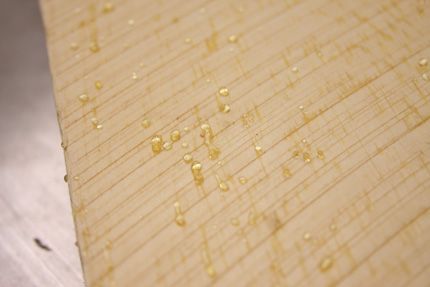
One big sappy mess. Almost 60% of the pine I'd bought for a contempo projection was covered in thick globs of sap. There was no mode I could car the cloth in this state.
A few months ago I fell upon a heck of a adept deal on some locally-milled white pine I wanted to use in the construction of a simple Shaker writing table. A swain Taunton Press staffer had taken downwardly a massive tree on his property and had it kiln-dried by a local outfit, which subsequently sold the material off to us at a great price.
Yous Get What You Pay For
Trouble was, some of the forest may not have reached the critical temperature necessary to set the sap while in the kiln. The lumber had been air stale and subsequently heated in a kiln, but something was wrong. After only virtually a week in the FWW workshop, about 60% of the wood I'd paid almost $100 for began to weep sap like nobody'southward business. I needed a game programme, and fast. Luckily, the wide boards for my tabletop and front/rear aprons were largely centre woods and thus, totally sap-costless. The rough boards I planned on using for the legs, drawers and short aprons, still, had enough sapwood in them to render them virtually unusable.
My Kitchen Provides the Perfect Solution
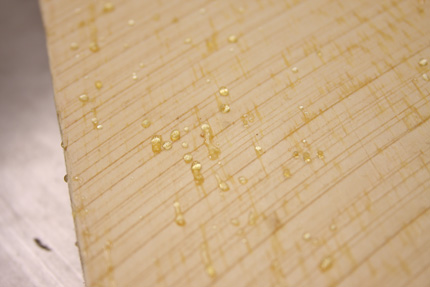
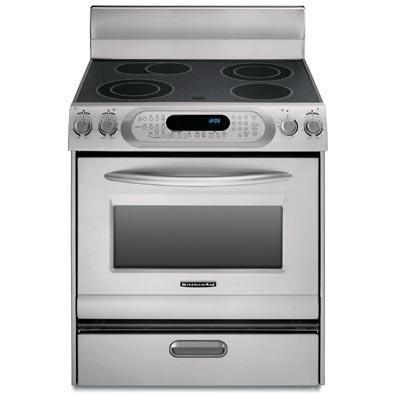
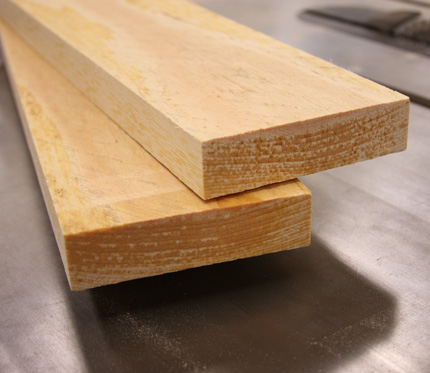 Here's how I got around the sap problem: I began past scrubbing off equally much of the pasty stuff every bit possible using rags and mineral spirits. Then, I cut off as much of the sappy edge grain every bit possible at the bandsaw and rough-cut my smaller components to size. From in that location, it was merely a matter of baking the woods until the sugary sap crystalized and then hardened. I baked the pine at 160-degrees for a trivial over an 60 minutes–keeping a close eye on the oven for safety reasons. I found that the high temperature actually did 2 things: 1) it drove almost of the sap up to the surface, where I could easily remove it with hand tools, and 2) it hardened any sap left behind in the wood, thus preventing possible "weeping" through my final finish in the futurity. In the photograph at left, yous tin can conspicuously see how the sap migrated to the surface, particularly via the finish grain.
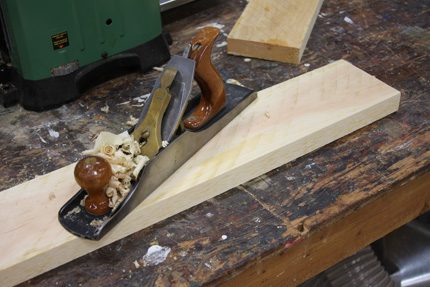
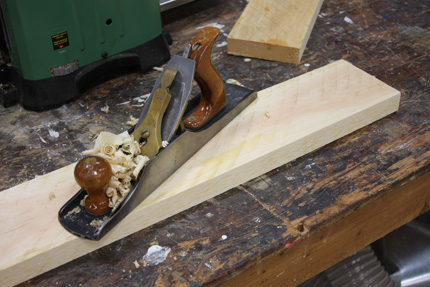 With the sap at present dried and hardened, I worked the boards with a handplane to become rid of all the sap that had migrated to the surface while in the oven. Hardened sap will dull your planer and jointer knives super-fast, and it'southward easier to re-acuminate a aeroplane iron than a set of jointer knives.
With the boards at present sap-gratuitous, I was able to mill them to thickness equally usual, using my jointer and planer without any problem. I came away with smooth, clear boards and my shop machinery wasn't any worse for wear! As for the table, I've now got the legs nicely tapered and mortised, and today I'll caput back into the shop to manufacturing plant all my aprons to final size and cut the tenons. I'll be sure to mail service the piece in FWW's online gallery once it'due south all assembled.
Final Product
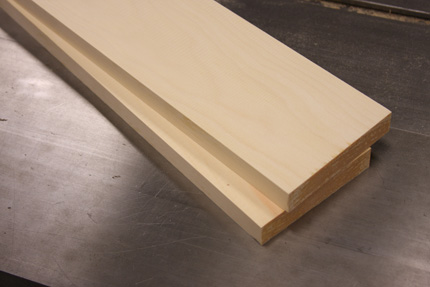
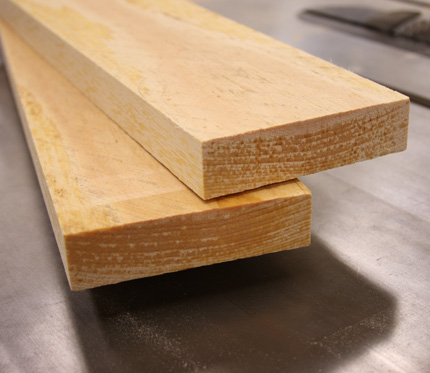
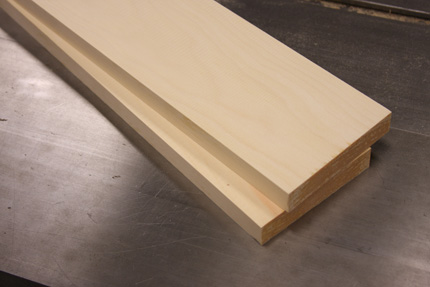
Afterwards baking, handplaning, and surfacing my pine components, hither's what I'thou left with; beautiful, articulate boards just perfect for my table's aprons. Sometimes life gives you lemons, and when that happens in the woodworking shop (and yous've got a limited budget to work with), y'all've got to engage in some creative problem solving. If anyone else out there has more tips on this field of study, I'd dearest to get the word out in the comments section at the lesser of this postal service. Happy building!


How To Remove Sap From Wood Before Painting,
Source: https://www.finewoodworking.com/2011/10/14/how-to-set-wood-sap
Posted by: bennettnoce1980.blogspot.com
0 Response to "How To Remove Sap From Wood Before Painting"
Post a Comment